One of the lesser-known secrets is that rhinoplasties are the most demanding, complex, and beautiful cosmetic surgeries.
The nose is a complex organ supported by bone and cartilage. The nasal septum consists of bone and cartilage that extends from the nostrils to the upper throat. Rhinoplasty can correct those internal and external details.
Another secret behind rhinoplasty is: There is no maximum age.
It’s never too late to improve your breathing and appearance. To undergo this procedure, you only need to be in good health.
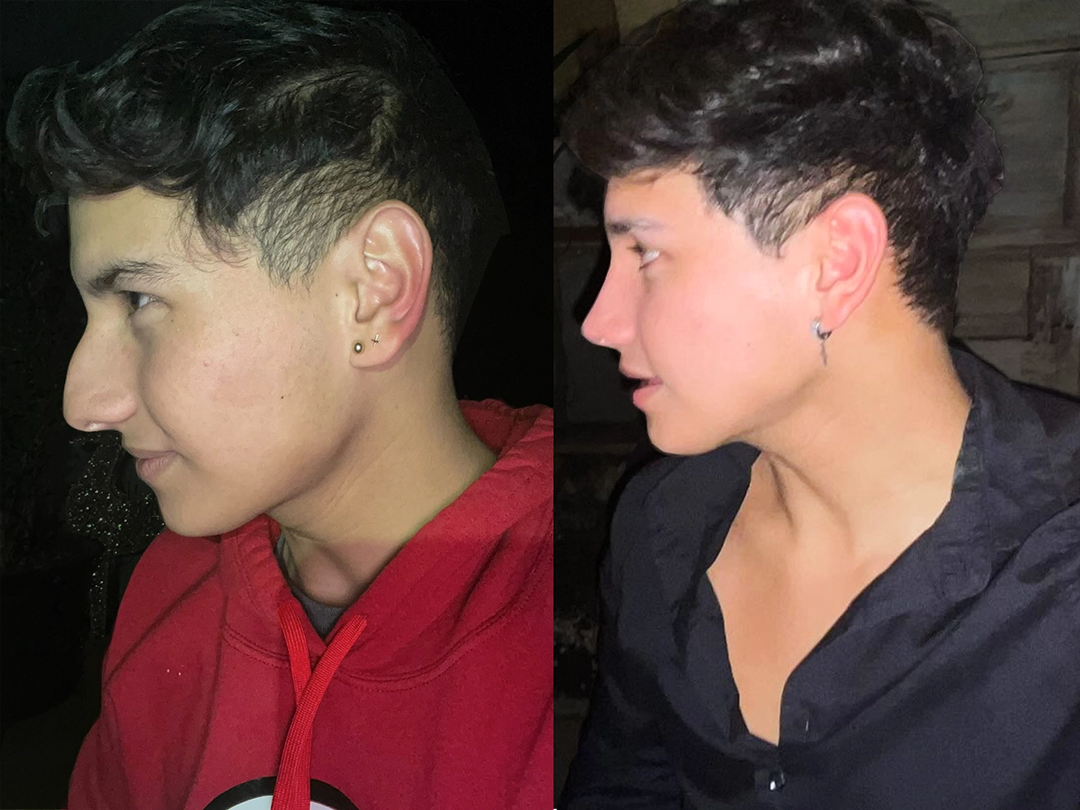
Before:
After:
It is important to note that performing this procedure at an early age depends on the presence of functional alterations or nasal obstructions. Facial structures go through different growth peaks depending on sex: 90% of facial development is typically complete by age 14–15 in girls, and 16–17 in boys.
During your consultation your ENT doctor will conduct a thorough review to answer all your questions about procedures and your symptoms, such as:
During your review, you receive conscious care to understand your needs and expectations to improve the appearance of your nose. Everything possible is evaluated while respecting your natural facial structure.
Both involve the same dissection and incisions. The only difference is that open rhinoplasty uses an incision under the nose—externally visible once healed—while closed rhinoplasty leaves the scar internally.
Closed Rhinoplasty: Closed Rhinoplasty: involves two internal incisions. Through small, clean cuts, bone and cartilage are reshaped. Soft tissues then adapt to the new form, and the surgery ends by closing the incisions with dissolvable sutures. Advantage: generally shorter surgery time.
Open Rhinoplasty: Open Rhinoplasty: involves an incision across the columella (between nostrils), which gives immediate access to bones and cartilage. Provides greater movement and visibility to the surgeon—ideal for substantial reshaping.
Reconstructive Rhinoplasty
It is crucial to go to specialized experts. Otherwise, aesthetics may be prioritized over functionality, leading to excessive cartilage removal that can collapse the lateral cartilages, affecting both appearance and quality of life.
Open rhinoplasty is recommended because it offers better tissue exposure. These surgeries carry a higher risk of bleeding and altered tissues, but allow correction of large deformities or substantial nasal structure modifications, improving both form and function.
Keep in mind: it's not just the surgery that's customized—post-operative care and follow-ups are also tailored. To get the nose you want, it's essential to attend your control visits with Dr. Pamela Pérez.
If you're interested in results that enhance your beauty and overall well-being, we invite you to schedule your evaluation appointment in our calendar.